Sep 3, 2026Success Stories
Success Story: 5000L + 4500L Whiskey Distillation System in Nepal — From Shipping Crates to First Run
How a Nepalese distillery went from shipping crates to a running 5000L + 4500L twin copper pot still whiskey line — layout, installation, commissioning and lessons learned.
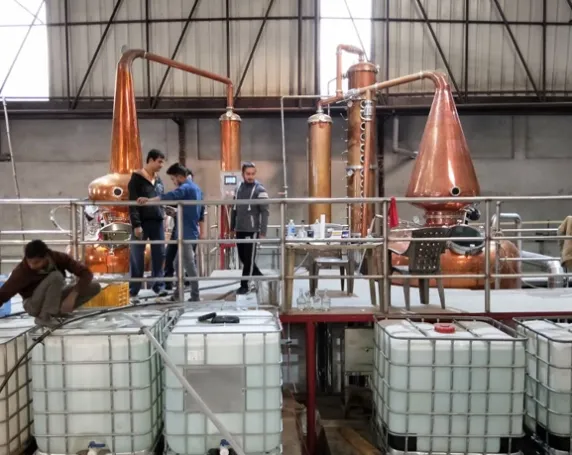
When the truck pulled up to the warehouse outside the Kathmandu Valley, the stills were still in their export crates. Six weeks later, the same spot looked like the photo above: a 5000L copper pot still doing the wash runs, a 4500L spirit still beside it, and a full row of IBC tanks waiting to take the new-make away.
This is the story of how that happened — what the client needed, what we built, and a few things we only learned once we were standing on the platform.
Starting Point: Real Volume, Real Constraints
The client is a Nepalese spirits producer moving up from small-batch production into a serious commercial whiskey program. The brief they sent us was short and honest:
- Enough capacity for continuous, multi-shift wash and spirit runs
- Full copper contact on the vapor path — they were firm on this, and they were right
- Steam heating (their boiler room was already planned around it
- Everything had to clear the warehouse door, the roof trusses, and a floor that was never poured with 5-ton stills in mind
That last point is the one nobody puts in the brochure. In our experience, building constraints kill more distillery projects than budget does, so it's where we always start. Our team pulled the site drawings first and designed around the building — not the other way around.
The Setup: One Washes, One Finishes
We proposed a twin-still configuration instead of one oversized hybrid unit:
5000L wash still. A red copper pot still with a wide, squat onion head — built for volume and gentle, even heating of grain wash with solids in it. The vapor takes a short path up and over through a copper lyne arm to a shell-and-tube condenser sized for long stripping runs.
4500L spirit still. Slightly smaller, with a taller neck and a copper rectification column — the plated column you can see on the right side of the photo. This is where the hearts cut gets made, and it's where the copper does its real work.
Why two stills instead of one do-everything machine? Because that's how whiskey has been made for two centuries, and for good reason: stripping and spirit runs want different things from the equipment. A dedicated wash still runs dirty and fast; a dedicated spirit still runs clean and precise. Splitting the job means the client isn't babying one still through two very different duties, and if one unit is ever down for cleaning or maintenance, the other keeps producing.
Every surface the vapor touches is T2 red copper — pots, helmets, lyne arms, column. If you're wondering why we insist on copper for whiskey when stainless is cheaper and easier to weld, the short answer is sulfur. Copper strips sulfur compounds out of the vapor and helps form the esters that give malt spirit its fruit and weight. We wrote a longer explanation here: Why T2 Red Copper Matters for Distilling.
What the Photo Actually Shows
A few details worth pointing out, because they were all deliberate decisions:
The platform. The grated steel platform wasn't an accessory — it was part of the layout from day one. At this scale, the manways, valves and spirit safe all sit above head height. The platform gives operators safe access to everything without ladders, and the stills were positioned so that one person standing in one spot can watch the wash still's sight glass and reach the spirit still's sampling tap.
The IBC tanks in the foreground. Those 1000L tanks hold low wines and new-make spirit between runs. We sized the transfer pumps and piping around this exact workflow: charge the wash still, strip to low wines into IBCs, then feed the spirit still from the tank farm. It looks simple in the photo. It took three layout revisions to make the pipe runs short enough that the client wouldn't lose spirit to dead legs.
The column. The plated rectification column on the spirit still gives the distiller the option to run a cleaner, lighter spirit when the recipe calls for it — useful for a producer who may add rum or a lighter whisky style later. If you're weighing up this kind of hybrid setup against a straight pot still, our breakdown of pot still vs column still covers the trade-offs honestly.
Steam, not direct fire. Both stills are steam-jacketed. With 5000L of wash, direct flame or electric elements would mean hot spots, scorched grain, and caramelized off-flavors you can never distill out. Steam gives an even, controllable heat — slower to start, but the spirit is cleaner for it. We compared the two approaches in detail in our steam vs electric heating guide.
Commissioning: The Part That Takes Longer Than Expected
Shipping from Shanghai to Nepal, customs, and cranage went smoothly. The part that always takes longer than clients expect is commissioning — and this project was no exception.
Our engineers spent the first days on site doing the unglamorous work: pressure-testing every joint, verifying the condenser water flow rates (local supply pressure was lower than spec'd, so we adjusted the pump curve), and running water-only test distillations to check for vapor leaks. Only then did the first real wash go in.
The first spirit run told us the design had done its job: clean foreshots, a long stable hearts fraction, and tails that came in gradually rather than collapsing — exactly what you want from a spirit still with this much copper contact.
One honest note for anyone planning a similar project: budget time for your boiler. The stills were ready before the steam supply was. It's the most common delay we see on commercial builds, everywhere in the world.
Lessons From This Build
If you're planning a commercial whiskey distillery at this scale, three things from this project are worth stealing:
- Design around the building, not the catalog. Door heights, floor loading and roof trusses decided more of this layout than any still specification did.
- Twin stills beat one giant still for traditional double-distilled whiskey — flexibility, flavor control, and no single point of failure.
- Plan the workflow, not just the equipment. IBC positions, pump routes and where the operator actually stands matter as much as copper thickness once production starts.
This system is the production-scale sibling of our standard TGS-5000 5000L copper pot still system — the Nepal build added the dedicated 4500L plated-column spirit still, the platform, and the site-specific steam and transfer piping. If your volumes are smaller, the same twin-still logic scales all the way down to our 1000L copper pot column still.
And if you're still at the spreadsheet stage — working out what a commercial setup costs in total, not just the stills — our craft distillery cost breakdown is a good place to start before you talk to anyone, us included.
FAQ
Why use two stills (5000L + 4500L) instead of one large still?
Traditional whiskey is double-distilled: the wash still strips the fermented wash into low wines, and the spirit still refines them into new-make spirit. Each job stresses the equipment differently, so dedicated stills produce better flavor and give you redundancy — one still down for maintenance doesn't stop production entirely.
Why red copper for a whiskey still?
Copper reacts with sulfur compounds in the vapor and removes them, while promoting the ester formation that gives whiskey its fruity, full character. Stainless steel doesn't do this. For malt whiskey especially, copper contact isn't a luxury — it's the difference between clean spirit and a sulfur note you can never age out.
Steam heating or electric heating for a 5000L still?
At this scale, steam. Direct electric elements create hot spots that scorch grain solids in the wash, producing burnt, caramelized off-flavors. Steam jackets heat the entire pot evenly and give far finer control over the run. Below roughly 500L, electric becomes a reasonable option.
How long does it take to install a commercial distillery like this?
For this project: manufacturing and sea freight took the largest share, on-site installation about two weeks, and commissioning (pressure tests, water runs, first real distillations) roughly another week. The most common delay is the steam boiler and utilities, not the stills — start those early.
Do you handle installation and commissioning overseas?
Yes. For the Nepal project our engineers traveled to site for installation supervision, pressure testing, operator training, and the first production runs. We do the same for commercial projects worldwide, with 24/7 remote support after handover.
Planning a commercial whiskey distillery? Tell us your target volume, your spirit style, and your building constraints — our engineers will come back with a layout and a quote. Get in touch or message us directly on WhatsApp.