Aug 6, 2026Technical Insights
Why Professional Agitators Are Crucial for High-Gravity Mashes
Tired of your mash burning to the bottom? Discover why professional agitators are crucial for high-gravity mashes and how proper mash tun design prevents scorching.
My mash keeps burning to the bottom
If you spend any time on distilling forums like Reddit, you’ve probably seen this exact plea for help. It’s a common nightmare for craft distillers: you invest in premium grains, spend hours mashing in, and halfway through the process, you smell that dreaded scorched caramel scent. The entire batch is ruined.
Almost always, this happens when a distillery scales up to high gravity fermentation without upgrading their mixing equipment.
Here at TengoDistill, we design and manufacture commercial distillation equipment every day. We’ve seen firsthand why a standard stirring mechanism isn't enough. Here is the technical breakdown of why a professional distillery agitator is the most important investment for your mash tun.
The Problem with High-Gravity Mashes
High-gravity mashing is incredibly efficient. By using a higher ratio of grain to water, you maximize sugar extraction, which leads to a higher ABV yield in your fermenters.
However, this creates a mash with the consistency of thick oatmeal. When you apply heat (whether via direct fire, steam jackets, or electric elements) to this thick mixture, heat transfer plummets. Without aggressive and calculated movement, the mash closest to the heat source superheats and burns instantly, while the center of the tank remains cold.
Hand-stirring with a wooden paddle might work for a 10-gallon home setup, but in a 500L or 1000L commercial mash tun design, it’s physically impossible to keep the liquid moving fast enough to prevent scorching.
What Makes a "Professional" Agitator Different?
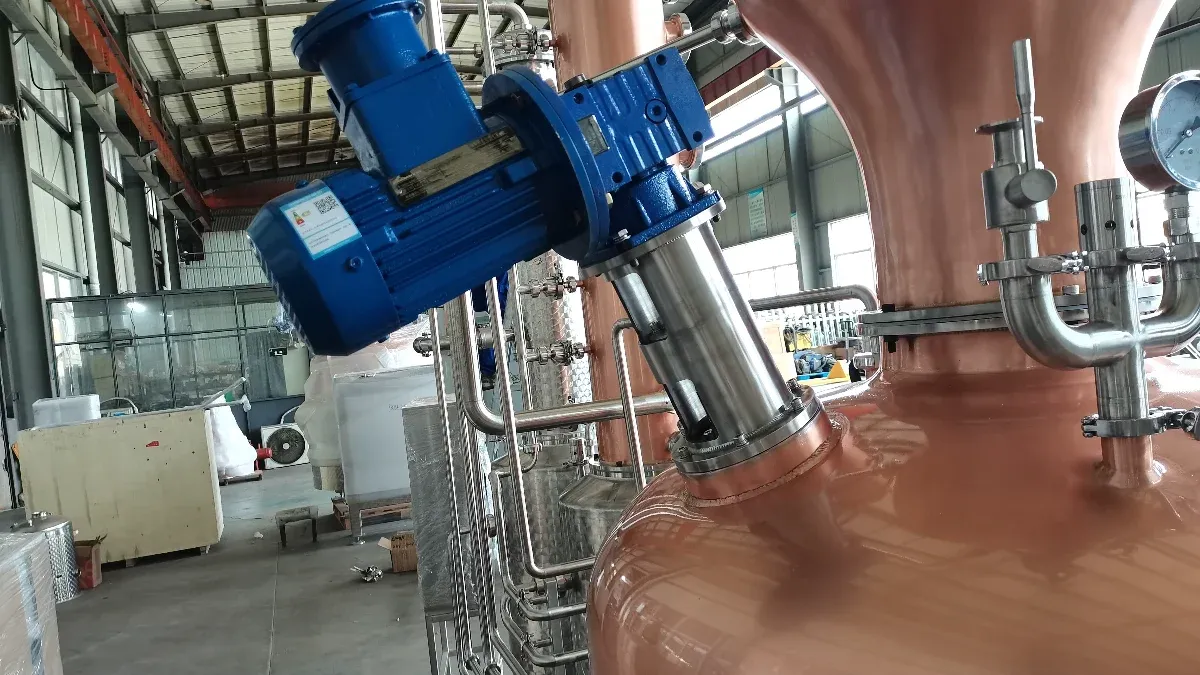
Not all motors are created equal. Bolting a generic mixer to the top of a tank won't solve a burn-on problem. A true professional agitator is engineered specifically for fluid dynamics.
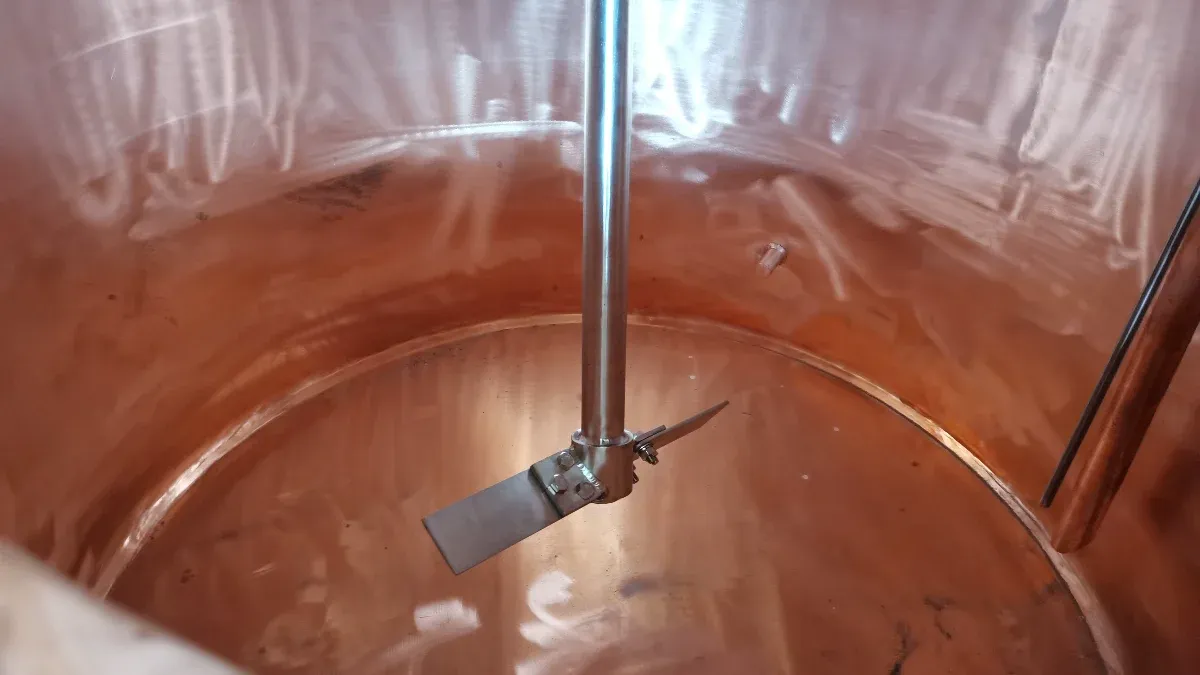
High Torque, Low Speed: Thick mashes require immense torque to move. A fast-spinning, weak motor will simply burn out or create a localized whirlpool while the edges burn. We use heavy-duty gearboxes paired with VFDs (Variable Frequency Drives) so you can control the exact RPM based on the thickness of your specific recipe.
Bottom & Wall Scrapers: This is the ultimate secret to preventing burn-on. Our agitator blades are fitted with food-grade PTFE (Teflon) scrapers. These blades physically sweep the heated bottom and sides of the jacketed tank with every rotation, making it impossible for sugars or proteins to stick and scorch.
Shear Force and Baffling: A good agitator doesn't just spin the liquid in a circle; it folds it. By angling the blades and utilizing internal tank baffles, the agitator forces the hot mash from the bottom up to the top, ensuring perfectly even temperature distribution for optimal enzyme activity.
Don't Let Poor Design Ruin Your Yield
Scaling your craft distillery should mean increasing profits, not increasing the number of burnt batches you have to dump down the drain.
Whether you are designing a brand new distillery startup layout or need to upgrade your current mash tun, the mechanics inside the tank matter just as much as the copper on the outside.
Are you struggling with mash consistency or equipment limitations? [Contact the TengoDistill engineering team today] – let’s build a custom mash tun equipped with an agitator that works as hard as you do.