Aug 17, 2026Buying Guides
50L vs 100L Still: Which Size Is Right for Your Distillery?
Choosing between a 50L and 100L still? Learn how batch size, heating capacity, materials and production goals affect the right distillation equipment.
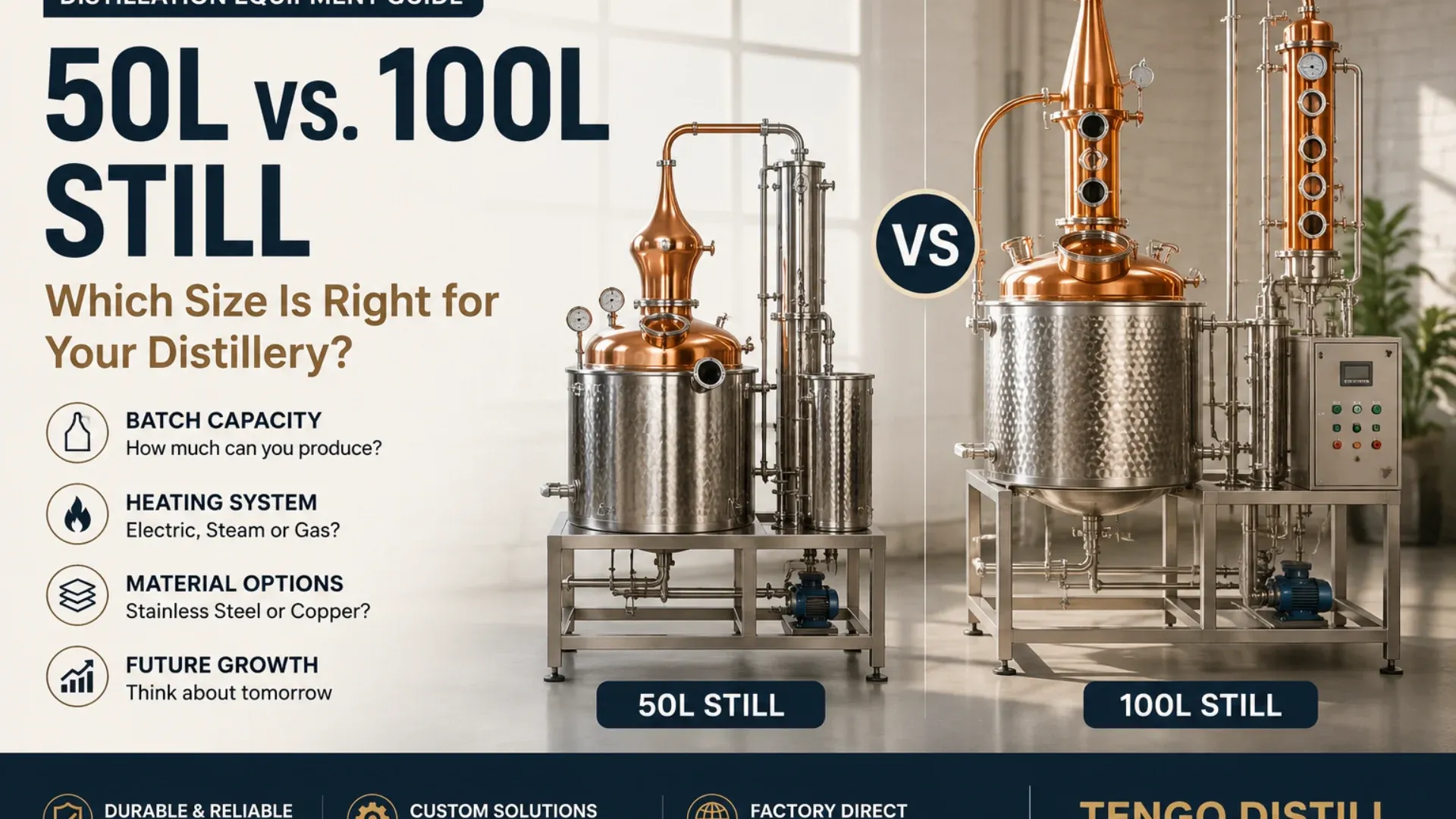
50L vs. 100L Still: Which Size Is Right for a Small Distillery? Choosing the right still size is one of the first decisions when starting a small distillery or upgrading your distillation equipment.
A common question is:
The answer depends less on the size of your business today and more on what you plan to produce, how often you will run the still, and whether you expect your production to grow.
As a distillation equipment manufacturer in China, we often help customers compare different still sizes before they place an order. Here are the key factors to consider.
50L vs. 100L Still: The Basic Difference
The biggest difference is simple: batch capacity.
A 50L still is generally suitable for:
- Small-batch distilling
- Product development and testing
- Craft gin and botanical distillation
- Hydrosol and essential oil production
- Hobby or pilot-scale production
A 100L still provides approximately twice the batch capacity and is more suitable when you want to produce commercially or expect your production volume to increase.
However, bigger does not automatically mean better.
The right size depends on your actual production requirements.
When Does a 50L Still Make Sense?
A 50L still can be an excellent starting point if you are:
- Developing new recipes
- Producing limited quantities
- Running a small craft operation
- Testing gin botanicals
- Making hydrosols or essential oils
- Unsure about future production volumes
For example, if you are producing small batches of botanical spirits or experimenting with different recipes, a 50L still gives you enough capacity without requiring a large initial investment.
It is also easier to operate, clean and maintain compared with larger commercial systems.
For a new distillery, 50L can be a practical pilot-scale option rather than simply a "small" still.
When Should You Choose a 100L Still?
If you already have customers or plan to sell your products commercially, a 100L still may provide better long-term value.
The reason is simple: larger batches can reduce the amount of time spent repeating the same distillation process.
For example, if your production target requires 200L of plant material to be processed:
- With a 50L still → approximately 4 batches
- With a 100L still → approximately 2 batches
The exact output depends on the product, raw material, heating system and distillation process, but the principle remains the same:
More capacity can mean fewer production cycles.
If you expect your business to grow, buying a slightly larger still from the beginning can also help avoid upgrading too soon.
Stainless Steel or Copper?
Another important decision is the material.
Stainless Steel
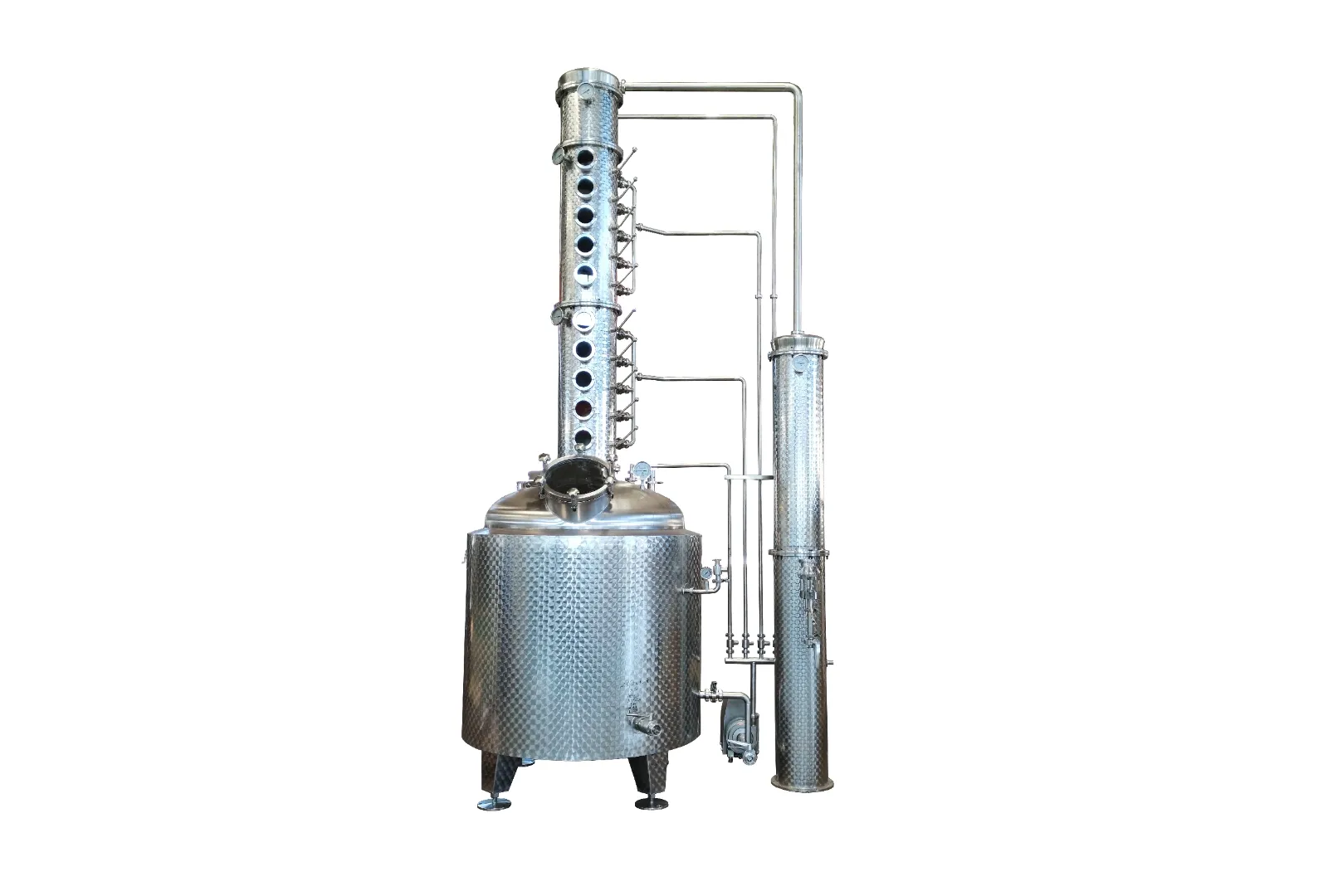
Stainless steel is popular because it is:
- Durable
- Easy to clean
- Resistant to corrosion
- Suitable for many types of botanical distillation
- Relatively low maintenance
For many small distilleries, a stainless steel still is the most practical choice.
Copper
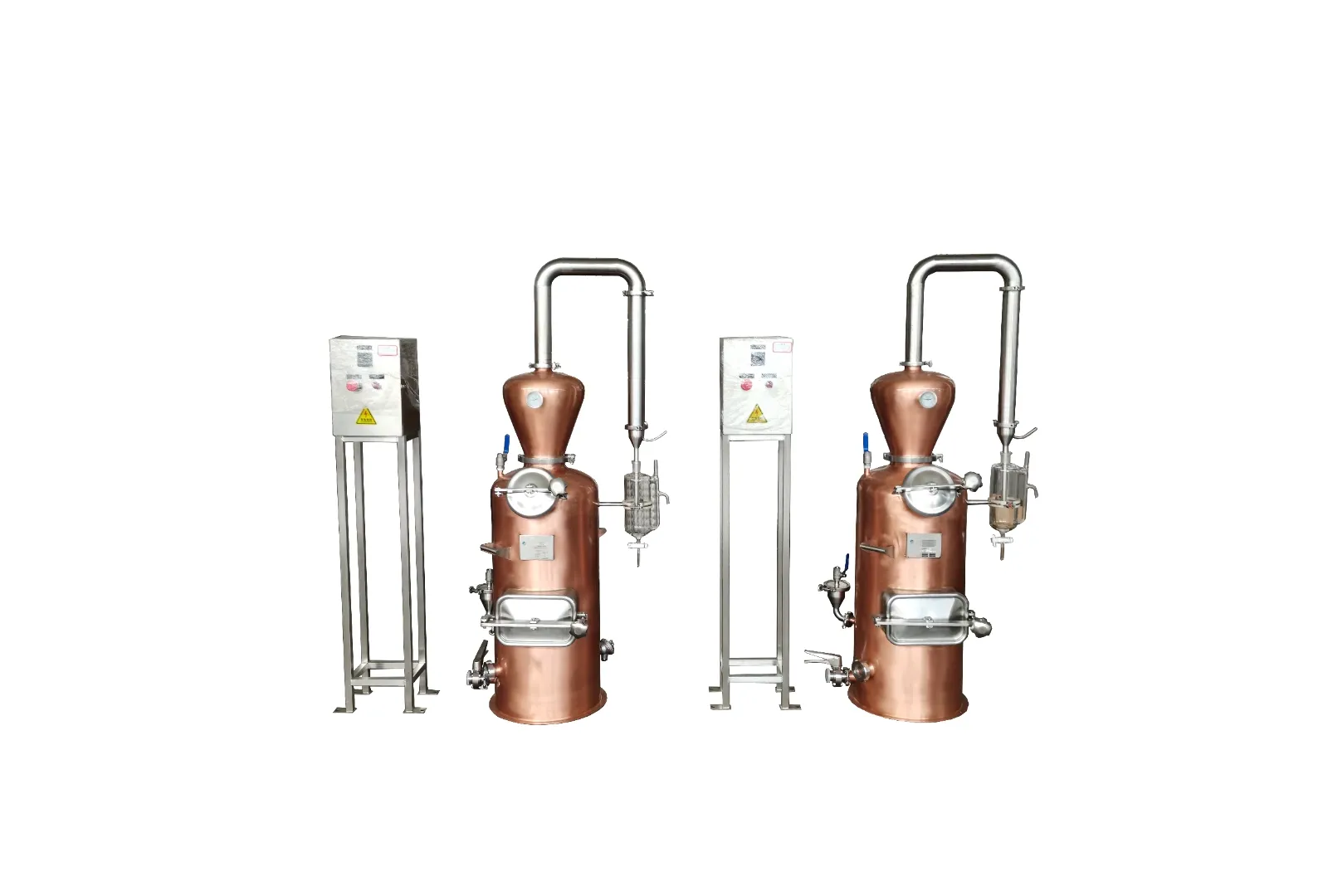
Copper is traditionally used in distillation and is especially popular for certain spirits.
It also has strong visual appeal, which can be important for craft distilleries where the equipment is visible to customers.
However, copper generally requires more maintenance and cleaning than stainless steel.
You don't necessarily have to choose one material exclusively.
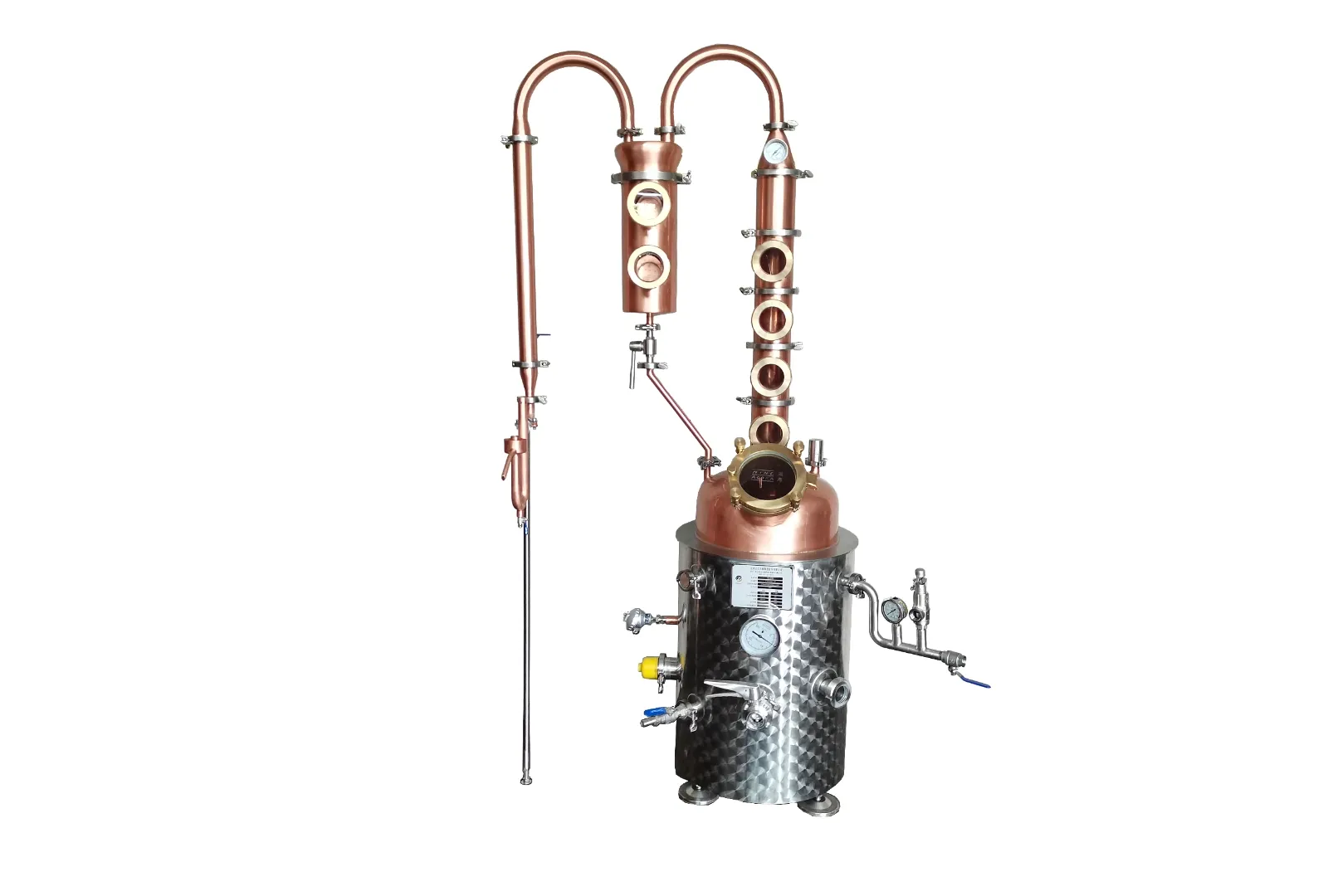
A stainless steel still with copper components, such as a copper head, copper packing or copper botanical basket, can provide a practical compromise between durability and copper contact.
Don't Forget the Heating System
One mistake we often see is focusing too much on still capacity and not enough on the heating system.
A larger still needs an appropriately sized heat source.
For example, if the heating system is undersized, a 100L still may take too long to reach operating temperature and may not generate sufficient steam for efficient distillation.
Depending on the application, heating options can include:
- Gas heating
- Thermal oil systems
The correct configuration depends on your local power supply, production scale and the material being distilled.
Still capacity and heating capacity should always be designed together.
How Much Output Can You Expect?
This is where things become more complicated.
A 50L still does not necessarily produce 50L of finished product.
Actual output depends on:
- Raw material
- Alcohol concentration
- Botanical loading
- Distillation method
- Heating power
- Cut points
- Desired product concentration
For hydrosol and essential oil production, the output can also vary significantly depending on the type and moisture content of the botanical material.
Therefore, when comparing equipment, don't only ask:
"How many liters is the still?"
A better question is:
"How much finished product can I realistically produce per batch and per day?"
This gives you a much better basis for comparing equipment.
Our Recommendation: Start With Your Production Goal
Before choosing between a 50L and 100L still, calculate three things:
1. How much product do you need per month?
2. How many batches can you realistically run per day?
3. Do you expect production to increase within the next 2–3 years?
If you are mainly testing recipes or producing small batches, 50L may be enough.
If you are already selling commercially or expect demand to grow, 100L may provide better long-term value.
And if your production target is significantly higher, it may make more sense to consider a larger commercial distillation system rather than simply choosing between 50L and 100L.
Need Help Choosing the Right Still?
At TENGO Distill, we manufacture stainless steel and copper distillation equipment in China for craft distilleries, botanical extraction, gin production, hydrosol and essential oil applications.
We don't recommend equipment based only on tank volume.
We look at your raw materials, production target, heating method, local power supply and expected future capacity to help determine the right configuration.
Not sure whether you need a 50L, 100L or larger still?
Contact us with your expected production volume and application, and we can help you work out a suitable configuration.